We live in an era where cognitive currency is the most valuable asset you can possess. Whether you are an entrepreneur making high-stakes decisions, a student preparing for grueling exams, or simply someone trying to navigate a complex world, your brain is the engine driving your success.
Yet, most of us are driving a Ferrari while stuck in first gear. We experience brain fog, memory lapses, and mental fatigue, assuming that this sluggishness is just a normal part of life or aging.
This could not be further from the truth. The human brain is not a static, unchangeable organ. It is a highly adaptable, dynamic supercomputer capable of extraordinary feats. Learning how to activate your superbrain is not about unlocking mystical secrets; it is about aligning your daily habits with cutting-edge neuroscience.
In this comprehensive guide, we will dive deep into the biological mechanics of cognitive enhancement. You will discover actionable, science-backed strategies to rewire your neural pathways, banish mental fatigue, and operate at your absolute peak.
The Foundation: Understanding Neuroplasticity
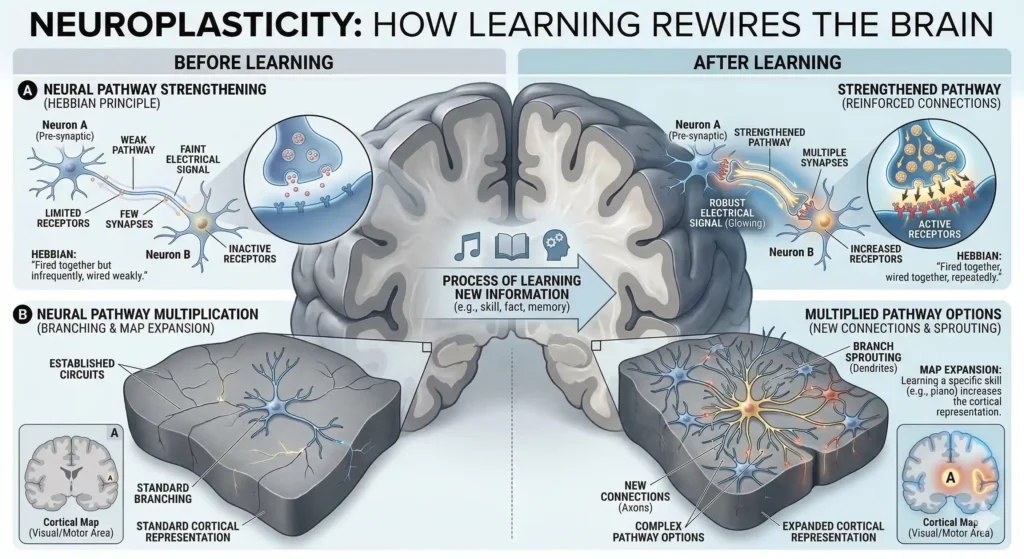
Before we can hack the brain, we must understand its most miraculous feature: neuroplasticity. For decades, scientists believed that the brain’s physical structure was fixed by early adulthood.
Today, we know this is entirely false. Neuroplasticity is the brain’s ability to reorganize itself, form new neural connections, and physically change its structure in response to learning, experience, and environment. Every time you learn a new skill, your brain literally wires new physical pathways.
According to researchers at Harvard Medical School, harnessing neuroplasticity is the ultimate key to maintaining a sharp, agile mind well into old age. To activate your superbrain, you must deliberately force your brain into states where neuroplasticity is maximized.
Hack 1: Fuel Your Brain with Premium Nutrition
You cannot build a supercomputer using cheap, low-quality materials. The gut-brain axis is a direct biochemical line of communication between your digestive system and your cognitive centers.
The Power of Omega-3 Fatty Acids
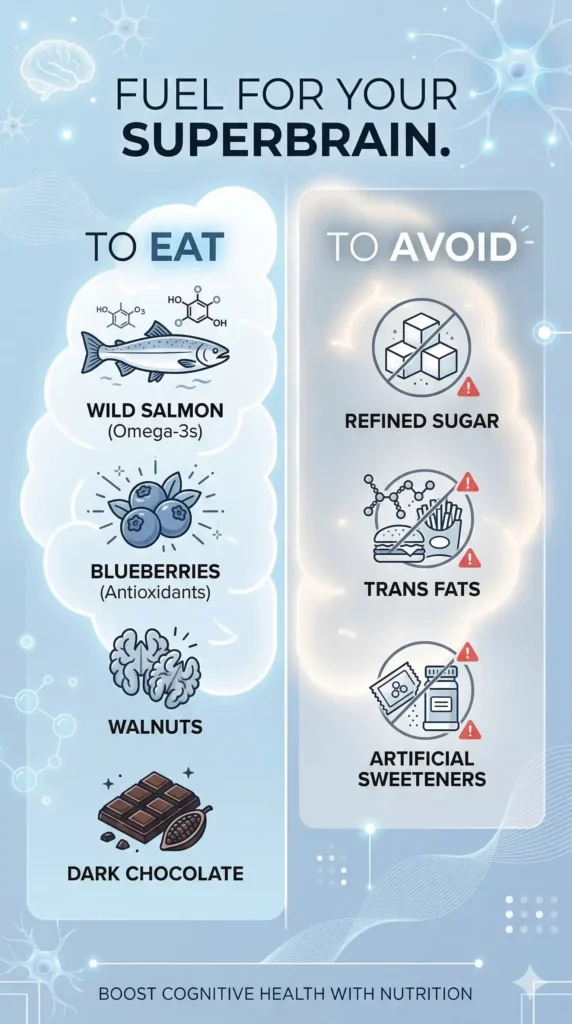
Your brain is nearly 60% fat, and it relies heavily on Omega-3 fatty acids (specifically DHA) to build brain and nerve cells. These fats are essential for learning and memory. Consuming wild-caught salmon, chia seeds, and walnuts provides the structural building blocks for a faster, more efficient brain.
Antioxidants and Brain-Derived Neurotrophic Factor (BDNF)
Oxidative stress damages brain cells and accelerates cognitive decline. Blueberries, dark chocolate, and green tea are packed with antioxidants that neutralize this damage. Furthermore, these foods help stimulate the production of Brain-Derived Neurotrophic Factor (BDNF), a crucial protein that acts like fertilizer for your brain, promoting the survival of existing neurons and encouraging the growth of new ones.
Hack 2: Master the Architecture of Sleep and Napping
Sleep is not a passive state of rest; it is a highly active biological process where memory consolidation occurs. If you want to activate your superbrain, sleep deprivation is your greatest enemy.
During the Deep Sleep stage, your brain literally shrinks slightly to allow cerebrospinal fluid to wash away toxic proteins (like amyloid-beta) that accumulate during waking hours. The Sleep Foundation confirms that a lack of restorative sleep drastically impairs working memory and executive function.
But what happens when you face a midday slump? This is where strategic resting comes into play. You do not always need a full eight hours to reboot your cognitive engine. Mastering the art of the 20-minute nap can clear out adenosine (the sleep-inducing chemical) and restore your alertness. If you want a step-by-step method, check out our guide on how to take a power nap while studying to effectively recharge your mind without grogginess.
Hack 3: Leverage Brainwave Frequencies
Your brain operates on different electrical frequencies depending on what you are doing. The key to accessing your superbrain is learning how to consciously shift these frequencies.
Most adults spend their days trapped in a high-Beta brainwave state, associated with chronic stress, anxiety, and overthinking. This constant state of alarm drains your cognitive reserves rapidly. To reach peak performance, you need to access Alpha and Theta brainwaves.
Theta waves (4–8 Hz) are deeply associated with the “flow state,” sudden insights, and rapid learning. You can access this state through deep meditation, or more quickly, through auditory brainwave entrainment. If you struggle with mental blockages, learning how to clear brain fog instantly by tapping into Theta waves can completely transform your daily productivity.
Hack 4: Continuous Novel Learning
The brain operates on a “use it or lose it” principle. If you only perform routine, familiar tasks every day, your brain becomes efficient but lazy. It prunes away the synaptic connections it deems unnecessary.
To activate your superbrain, you must introduce “novelty.” Learning something entirely out of your comfort zone forces the brain to expend energy creating new neural pathways.
Ways to Introduce Novelty:
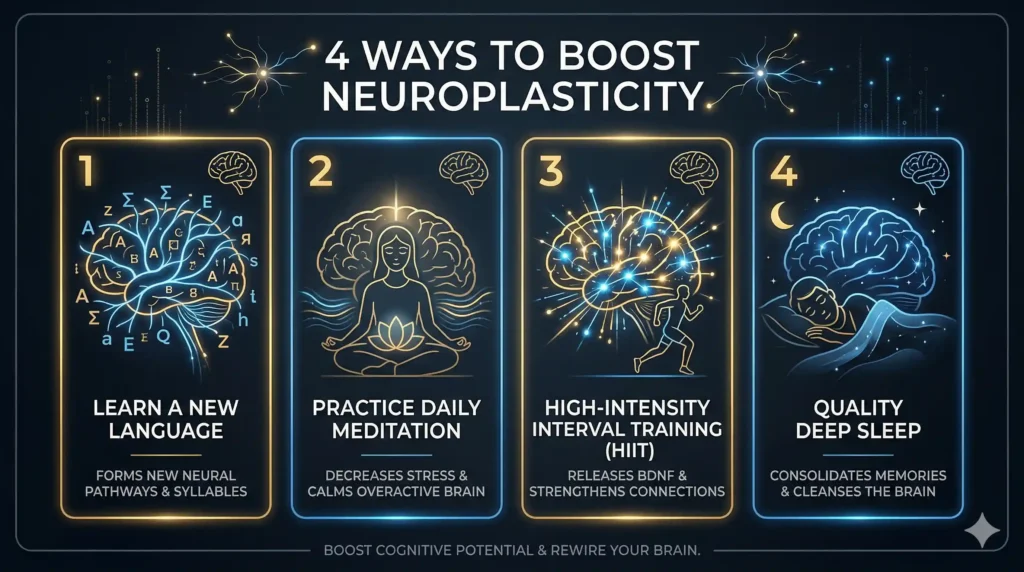
- Learn a New Language: This is one of the most cognitively demanding tasks you can undertake, engaging multiple regions of the brain simultaneously.
- Play a Musical Instrument: Playing music bridges the left (logical) and right (creative) hemispheres of the brain, strengthening the corpus callosum.
- Switch Up Your Routine: Even simple actions, like brushing your teeth with your non-dominant hand or taking a new route to work, force your brain out of autopilot mode.
Hack 5: Optimize Your Evening Cognitive Sessions
Many high achievers, students, and entrepreneurs do their most intensive work after the sun goes down. However, working late fights against your natural circadian rhythm, which can severely hinder your cognitive output.
To maintain a superbrain state during the late hours, you must control your environment. This means utilizing cool-toned LED lighting to suppress melatonin, keeping your room temperature slightly chilly, and engaging in active recall rather than passive reading.
If you are pushing through a difficult project or exam prep, mastering the specific techniques on how to stay alert while studying at night will ensure you are actually absorbing information, rather than just staring blankly at a screen.
Hack 6: Physical Movement as a Cognitive Catalyst
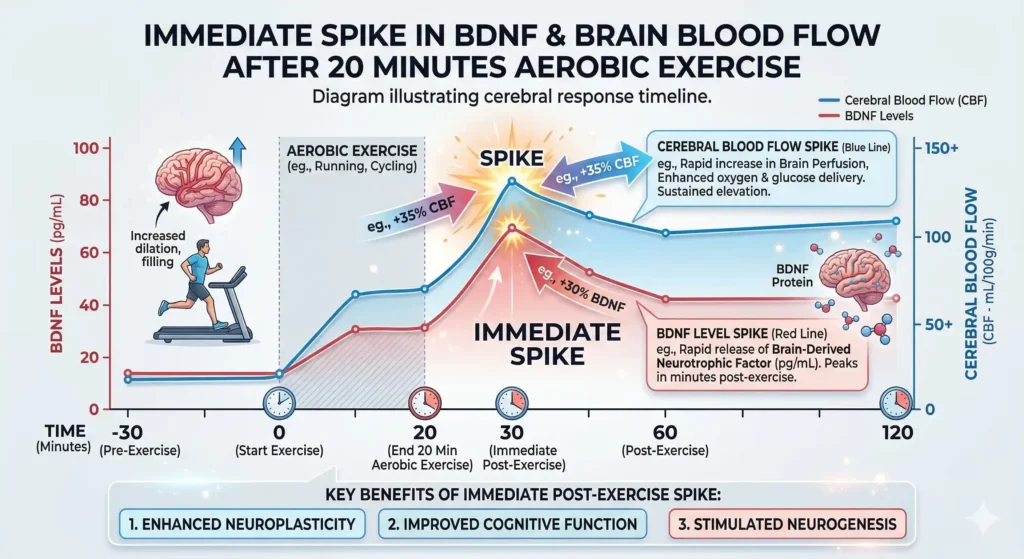
We often view physical exercise as a tool solely for the body, but it is actually one of the most powerful hacks for the brain. Cardiovascular exercise increases blood flow, delivering a massive surge of oxygen and nutrients to your cerebral cortex.
Moreover, high-intensity interval training (HIIT) has been shown to cause a massive spike in BDNF levels. Just 20 minutes of intense sweating can prime your brain for complex problem-solving and deep creative work for the rest of the day.
Hack 7: Measure and Manage Your Baseline Health
You cannot manage what you do not measure. Your cognitive function is inextricably linked to your overall physical and mental vitality. If you are constantly running on empty, no amount of brain hacks will save you.
It is crucial to periodically assess your holistic health. Are you recovering adequately from stress? Is your nutritional intake supporting your energy demands? By utilizing tools like a vitality index calculator, you can get a clear, data-driven picture of your baseline health.
When your baseline vitality is high, activating your superbrain becomes an effortless transition rather than an exhausting struggle.
The Psychological Shift: Cultivating a Growth Mindset
Finally, the activation of your superbrain requires a fundamental psychological shift. Coined by psychologist Carol Dweck, a “Growth Mindset” is the deep-seated belief that your intelligence and abilities are not fixed traits, but rather muscles that can be developed through dedication and hard work.
If you believe your memory is inherently bad, your brain will subconsciously look for evidence to prove you right. If you believe your brain is highly adaptable and capable of immense growth, you will naturally seek out challenges that strengthen your neural pathways.
By combining premium nutrition, optimized sleep, strategic novelty, and a relentless growth mindset, you will not just improve your memory—you will fundamentally upgrade your entire human operating system.
Frequently Asked Questions (FAQs)
-
1. How long does it take to physically rewire the brain?
While short-term memory changes can happen instantly, permanent structural rewiring (neuroplasticity) generally takes consistent practice over 3 to 6 months. Repetition and emotional engagement are the keys to speeding up this process.
-
2. Can I activate my superbrain if I am older?
Absolutely. While neuroplasticity is highest during childhood, the adult brain remains highly malleable until the end of life. In fact, engaging in rigorous cognitive training is one of the most effective ways to stave off age-related cognitive decline and dementia.
-
3. Are nootropics (smart drugs) necessary for peak performance?
No. While certain natural nootropics (like L-Theanine or Lion’s Mane Mushroom) can provide a helpful edge, they are completely useless if your foundational habits—sleep, nutrition, and stress management—are broken. Always fix your lifestyle before relying on supplements.
-
4. How does meditation physically change the brain?
MRI scans have shown that consistent daily meditation physically thickens the prefrontal cortex (responsible for focus and decision-making) and shrinks the amygdala (the brain’s fear and stress center). This results in a calmer, more focused, and highly rational mind.
-
5. Does fasting help improve brain function?
Yes. Intermittent fasting triggers a state called autophagy, where your body clears out damaged cells and toxins. Fasting also increases the production of ketones, which are a highly efficient, clean-burning fuel source for your brain, often leading to a profound sense of mental clarity.
Pingback: How to Stay Alert While Studying at Night: Science-Backed Strategies for Peak Focus - Gramonify
Pingback: How to Clear Brain Fog Instantly: The Science of Theta Waves - Gramonify