Your heart is the hardest-working muscle in your body, beating over 100,000 times a day to supply oxygen and nutrients to your cellular network. Despite its resilience, cardiovascular disease remains one of the leading health concerns globally. The good news? Your genetic blueprint is not your absolute destiny.
Through targeted lifestyle interventions, nutritional optimization, and stress management, you can drastically alter your cardiovascular trajectory. Keeping your heart healthy requires a proactive approach rather than a reactive one.
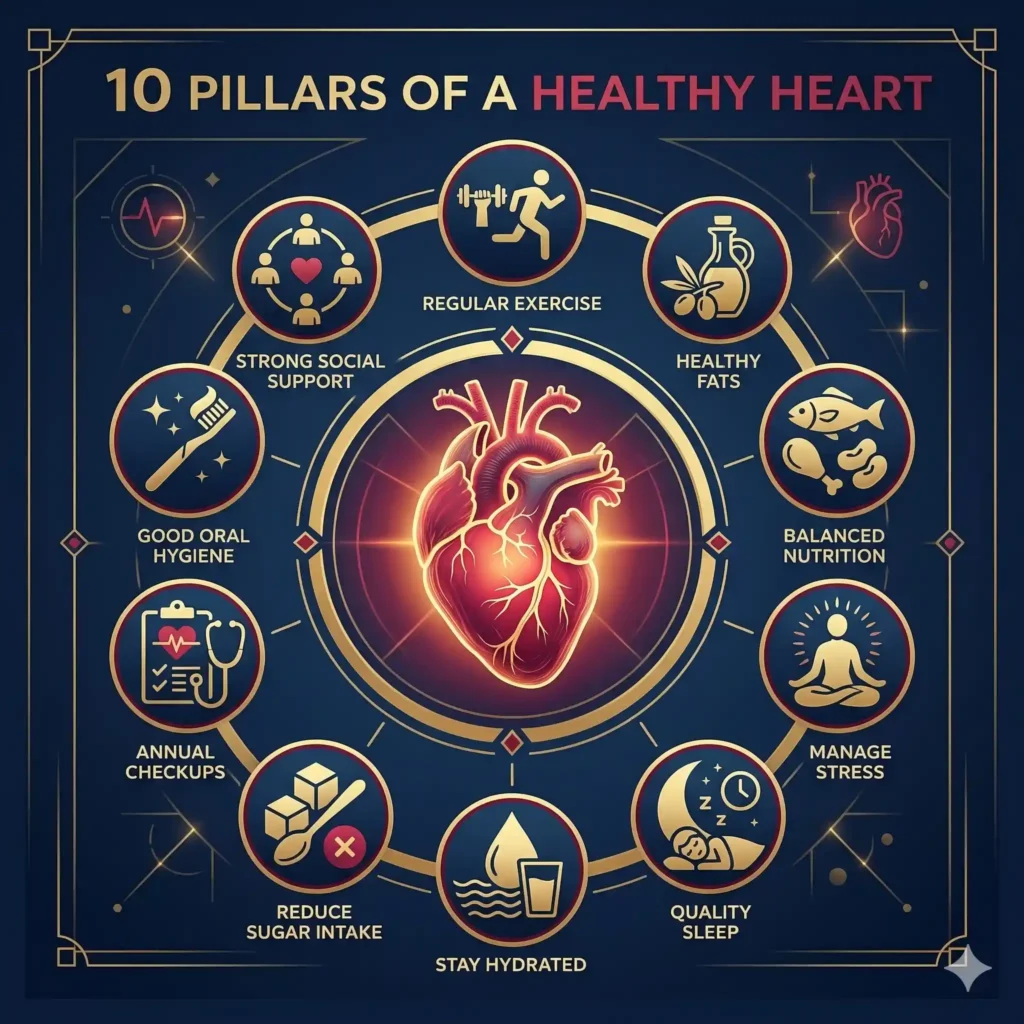
Here are ten deeply researched, actionable, and scientifically proven ways to fortify your cardiovascular system, optimize blood flow, and ensure long-term heart vitality.
1. Prioritize Both Aerobic and Resistance Training
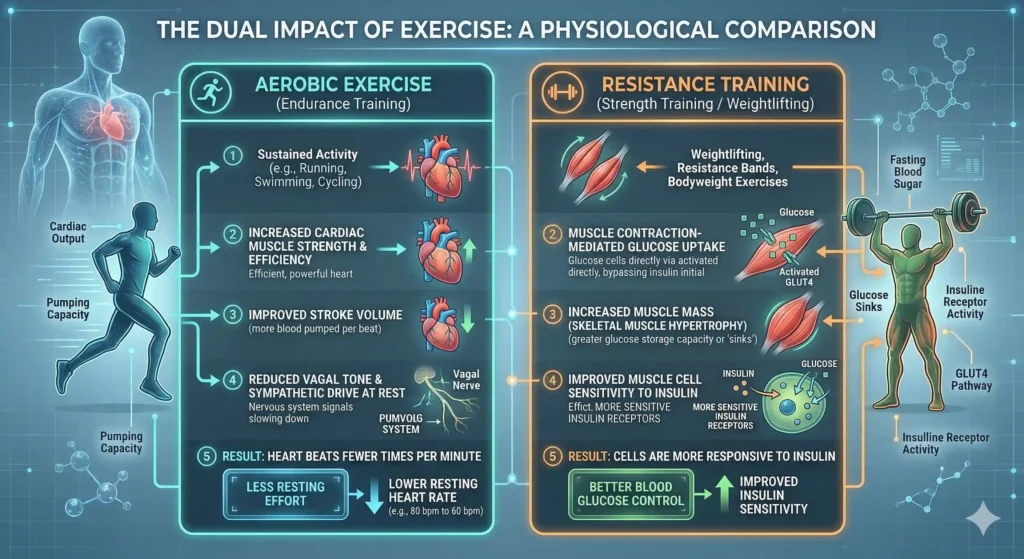
When most people think of heart health, they immediately picture jogging on a treadmill. While aerobic exercise (cardio) is fundamental, it is only half of the equation. Aerobic activities like swimming, cycling, and brisk walking improve your heart’s stroke volume—the amount of blood pumped per beat.
However, resistance training (weightlifting) is equally crucial. Lifting weights improves your body’s muscle-to-fat ratio, which directly reduces the burden on your heart. Increased muscle mass enhances insulin sensitivity, preventing the blood sugar spikes that damage arterial walls.
The American Heart Association recommends at least 150 minutes of moderate-intensity aerobic activity, paired with two days of moderate-to-high-intensity muscle-strengthening activity each week.
2. Adopt a Mediterranean-Style Nutritional Framework
Fad diets come and go, but the Mediterranean diet consistently ranks as the gold standard for cardiovascular longevity. This nutritional approach is less of a strict diet and more of a sustainable lifestyle framework.
It heavily emphasizes whole foods, particularly those rich in monounsaturated fats and Omega-3 fatty acids. Extra virgin olive oil, wild-caught fatty fish (like salmon and mackerel), nuts, and seeds should form the foundation of your fat intake.
These healthy fats combat endothelial dysfunction—the stiffening of blood vessels—and reduce systemic inflammation, keeping your arteries flexible and clear of plaque buildup.
3. Optimize Your Daily Protein Intake
Your heart is a muscle, and like all muscles, it requires an adequate supply of amino acids for repair and optimal function. However, the source of your protein matters significantly. Relying heavily on processed meats can introduce high levels of sodium and harmful preservatives into your bloodstream.
Instead, diversify your protein sources. Incorporate lean poultry, fish, legumes, and plant-based proteins like lentils and quinoa. To ensure you are meeting your body’s specific demands without overloading on unhealthy fats, utilizing a free protein intake calculator can help you precision-target your daily macronutrient needs for optimal cardiovascular support.
4. Master Stress Management and Cortisol Control
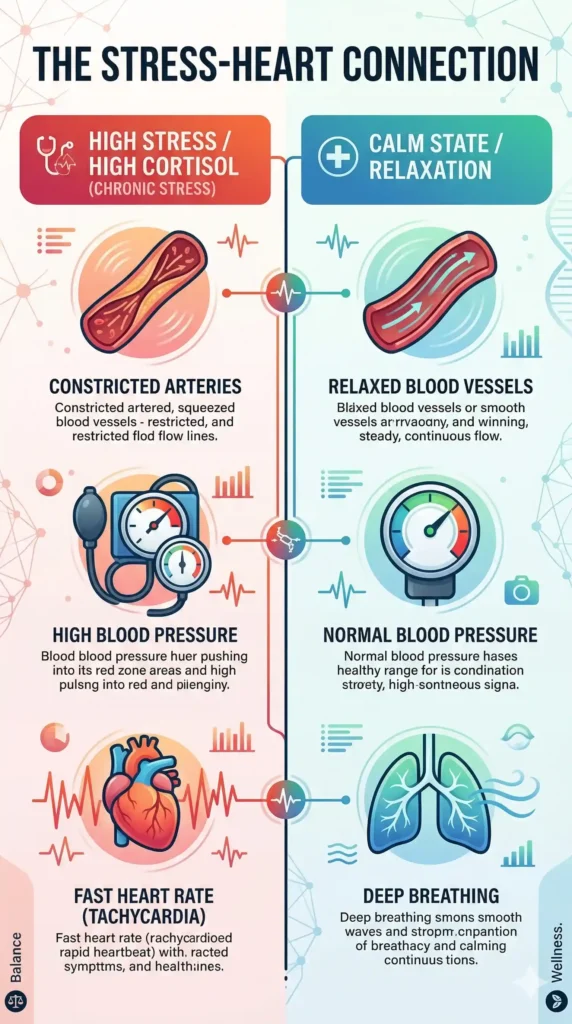
Chronic psychological stress is a silent killer of cardiovascular health. When you are constantly stressed, your sympathetic nervous system is trapped in “fight or flight” mode. This triggers a continuous drip of cortisol and adrenaline into your system.
Over time, elevated stress hormones cause your blood vessels to constrict, leading to chronic hypertension (high blood pressure). It also promotes the accumulation of visceral fat around your organs, further straining the heart.
Monitoring your baseline stress is the first step toward mitigation. You can use a stress level calculator to objectively measure your psychological burden and implement targeted relaxation techniques like deep breathing or meditation.
5. View Deep, Restorative Sleep as Cardiovascular Medicine
Sleep is not a luxury; it is a biological imperative for heart repair. During the deep stages of non-REM sleep, your heart rate slows down, and your blood pressure drops by 10% to 20%. This phenomenon, known as “nocturnal dipping,” gives your cardiovascular system a much-needed period of recovery.
Individuals who consistently sleep less than six hours a night miss out on this restorative window. Sleep deprivation increases oxidative stress and systemic inflammation, drastically raising the risk of plaque formation in the arteries. Aim for 7 to 9 hours of uninterrupted, high-quality sleep in a cool, dark room.
6. Maintain Optimal Blood Viscosity Through Hydration
Hydration is a frequently overlooked pillar of heart health. Blood is roughly 50% water. When you become dehydrated, your blood volume decreases. To compensate and maintain adequate blood pressure, your heart must beat faster and work significantly harder.
Furthermore, dehydration makes your blood thicker and more viscous, increasing the risk of clot formation and forcing the heart to pump against higher resistance. Drinking adequate amounts of filtered water throughout the day is essential.
Understanding the power of hydration and why water is your best wellness ally is foundational to preventing unnecessary cardiac strain.
7. Eliminate Trans Fats and Limit Added Sugars
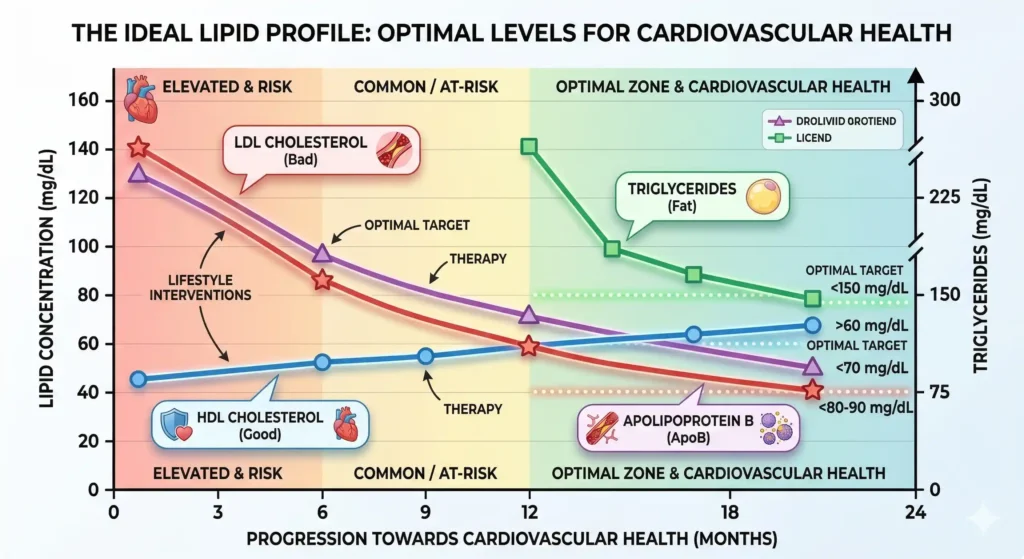
While healthy fats are beneficial, artificial trans fats are highly toxic to the cardiovascular system. Found in partially hydrogenated oils, processed baked goods, and fried foods, trans fats actively lower your HDL (good) cholesterol while raising your LDL (bad) cholesterol.
Similarly, a diet high in refined, added sugars leads to glycation—a process where sugar molecules bind to proteins, making blood vessels stiff and less elastic.
Research from the Harvard T.H. Chan School of Public Health explicitly links the elimination of artificial trans fats and the reduction of added sugars to a dramatic decrease in coronary heart disease risk.
8. Track Your Vitality and Biomarkers Regularly
You cannot manage what you do not measure. Waiting for physical symptoms of heart disease to appear is often too late, as cardiovascular issues can develop silently over decades.
It is vital to schedule regular blood panels to check your lipid profile (including ApoB), fasting glucose, and inflammatory markers like C-reactive protein (CRP). Beyond traditional lab work, keeping track of your broader health metrics ensures you are aging optimally.
Using a comprehensive tool like a vitality index calculator can give you a holistic snapshot of your biological age versus your chronological age, empowering you to make necessary lifestyle tweaks early on.
9. Prioritize Periodontal and Dental Hygiene
The connection between your mouth and your heart is surprisingly direct. Poor dental hygiene can lead to periodontal disease, a severe gum infection. The bacteria responsible for this infection can easily enter your bloodstream through bleeding gums.
Once in the bloodstream, these bacteria can attach to specific areas of the heart, potentially causing endocarditis (an infection of the inner lining of the heart). Furthermore, the body’s immune response to gum disease creates systemic inflammation, which is a known catalyst for arterial plaque rupture. Brush twice daily, floss meticulously, and never skip your dental check-ups.
10. Cultivate Strong Social Connections and Community
Human beings are biologically wired for connection. Isolation and profound loneliness are now recognized as major risk factors for heart disease, on par with smoking and obesity.
When you spend time with loved ones, engage in meaningful conversations, or participate in community activities, your brain releases oxytocin. This powerful hormone acts as a natural vasodilator, relaxing blood vessels and lowering blood pressure. Building a strong social support network acts as a psychological buffer against stress, fundamentally protecting your heart at a cellular level.
Conclusion
Protecting your heart is an ongoing, daily commitment. It is not about executing one massive, dramatic change, but rather stacking small, positive habits over time. By combining smart nutritional choices, consistent movement, rigorous stress management, and deep restorative sleep, you build an impenetrable fortress around your cardiovascular system. Start today—your future heart will thank you.
Frequently Asked Questions
-
What is a normal resting heart rate, and why does it matter?
A normal resting heart rate for adults typically ranges from 60 to 100 beats per minute. However, well-conditioned athletes may have resting heart rates closer to 40 or 50 bpm. A lower resting heart rate generally implies more efficient heart function and better cardiovascular fitness.
-
Can heart disease be reversed through lifestyle changes?
While structural damage (like a scarred heart muscle after a severe attack) cannot be entirely reversed, early-stage cardiovascular issues—such as endothelial dysfunction, high blood pressure, and early plaque buildup—can often be halted and significantly improved through aggressive lifestyle and dietary interventions.
-
Are eggs bad for my heart due to cholesterol?
Current nutritional science has largely debunked the myth that dietary cholesterol directly spikes blood cholesterol in most people. For the majority of the population, eating eggs in moderation (1-2 a day) does not increase the risk of heart disease and provides excellent, highly bioavailable protein.
-
How does alcohol consumption affect heart health?
While some older studies suggested mild benefits from red wine (due to resveratrol), the current medical consensus is that no amount of alcohol is actively good for your heart. Excessive alcohol consumption leads to high blood pressure, heart failure, and an increased risk of stroke. It is best to minimize intake.