We have all been there. The clock strikes midnight, your textbook is open, and a crucial exam or deadline is looming over you like a dark cloud. You know you need to push through, but your eyelids feel like they are made of lead.
Learning how to stay alert while studying at night is a rite of passage for many students and professionals. However, simply forcing your eyes open and staring blankly at a page is not actual studying—it is just suffering.
When you study late into the night, you are fighting against millions of years of human evolution. Your body is biologically programmed to rest when the sun goes down. To successfully study at night without sacrificing your cognitive function, you need to use science to hack your biology.
In this comprehensive guide, we will dive deep into actionable, well-researched strategies that will help you maintain laser-like focus, retain complex information, and conquer your late-night study sessions without destroying your health.
The Biology of Sleep: Why You Feel So Tired
To beat fatigue, you must first understand it. Your body operates on a 24-hour internal clock known as the circadian rhythm. This biological pacemaker dictates your sleep-wake cycle, hormone production, and core body temperature.
As darkness falls, your brain’s pineal gland begins secreting melatonin, the hormone responsible for making you feel sleepy. According to the Sleep Foundation, your circadian rhythm strongly influences your alertness levels, typically causing the deepest dip in energy between 2:00 AM and 4:00 AM.
When you try to study during these hours, you are swimming against the biological current. Your brain’s processing speed slows down, and memory consolidation becomes much more difficult. Therefore, staying alert requires intentionally sending your brain “wake-up” signals to temporarily suppress melatonin production.
Environment is Everything: Setting Up for Success
Your study environment plays a massive role in tricking your brain into staying awake. If you are trying to study in a cozy, dimly lit room, your body will naturally prepare for sleep.
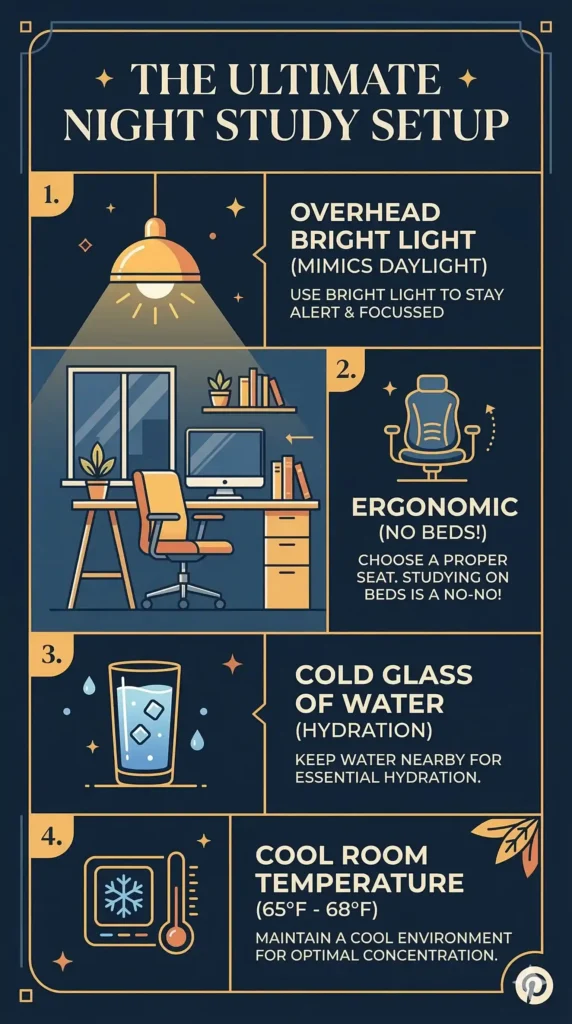
1. Master Your Lighting
Lighting is the most powerful cue for your circadian rhythm. Avoid warm, dim light at all costs. Instead, flood your study space with bright, cool-toned light.
LED lights that mimic natural daylight (around 5000K to 6000K) suppress melatonin production effectively. If possible, have an overhead light on, paired with a bright desk lamp directed at your materials.
2. Ditch the Bed
Never study in bed. Your brain heavily associates your bed with sleep and relaxation. When you bring textbooks into that space, you blur the psychological boundaries between wakefulness and rest.
Sit at a proper desk with an ergonomic chair. Maintaining an upright posture signals to your nervous system that it is time to work, not wind down.
3. Control the Temperature
A warm, toasty room is a one-way ticket to dreamland. As your body prepares for sleep, its core temperature naturally drops. If your room is too warm, it induces lethargy and drowsiness.
Keep your study space slightly chilly. A room temperature between 65°F and 68°F (18°C – 20°C) is ideal for keeping your senses sharp and preventing you from feeling too comfortable.
Nutritional Tactics: Eating for Alertness
What you put into your body during a late-night session will either be your greatest weapon or your ultimate downfall. Reaching for the wrong snacks will lead to a massive crash.
4. The Caffeine Conundrum
Caffeine is the go-to solution for late-night studiers, but it is often misused. Chugging a massive energy drink will spike your energy temporarily, but it will be followed by severe jitters and an inevitable crash.
Instead, practice “micro-dosing” your caffeine. Sip green tea or black coffee slowly over a few hours. Experts at Harvard Health note that moderate caffeine intake can improve cognitive function and memory, but exceeding 400mg can lead to anxiety and disrupt your eventual sleep cycle.
5. Hydration is Non-Negotiable
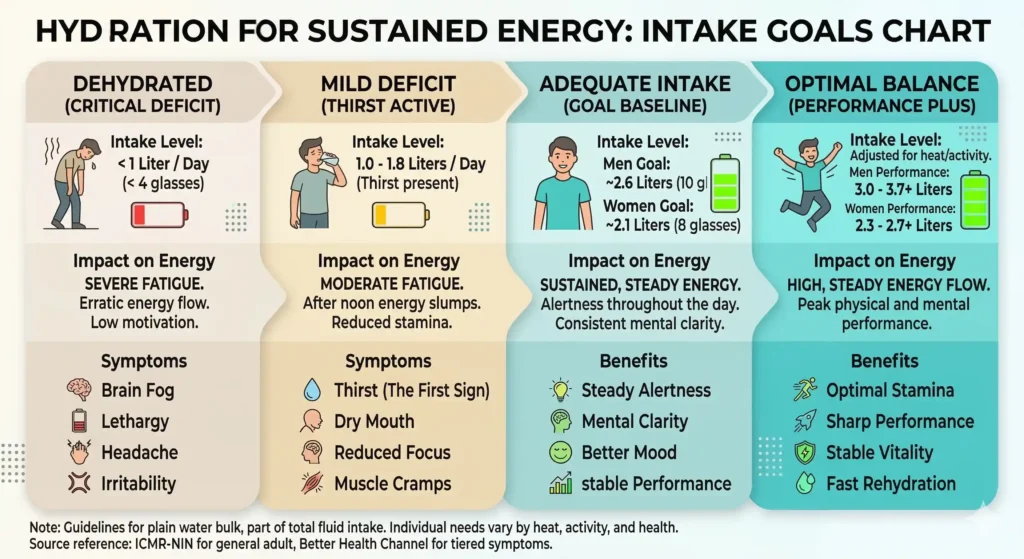
Fatigue is often the first symptom of mild dehydration. When your brain lacks water, it literally shrinks slightly, causing brain fog and headaches.
Keep a large glass of ice-cold water on your desk. The physical sensation of drinking cold water provides a mild shock to your system, instantly boosting your alertness.
6. Snack Smart, Not Sweet
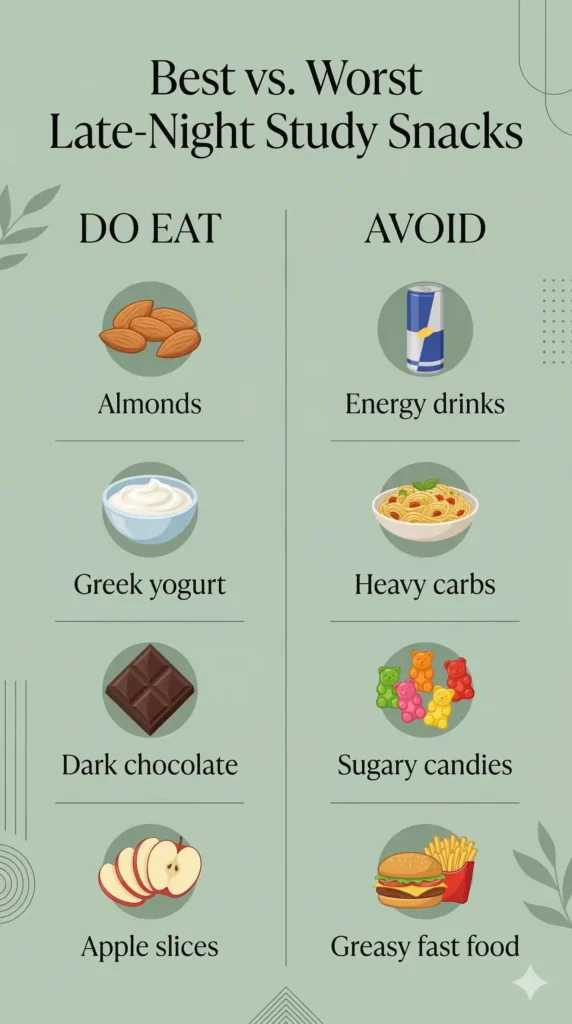
Avoid simple carbohydrates and sugary snacks like candy or chips. These cause a rapid spike in blood sugar followed by a massive drop in insulin, leaving you feeling exhausted.
Instead, opt for high-protein, low-glycemic snacks. Handfuls of almonds, Greek yogurt, or apple slices with peanut butter provide slow-releasing energy. If you are wondering how your overall energy reserves are holding up, you can check your baseline health metrics using a vitality index calculator.
Brain-Hacking Focus Techniques
Staring at a textbook for hours is a passive activity. Passive activities invite sleep. To stay awake, you must force your brain to actively engage with the material.
7. Utilize Active Recall
Do not just read and highlight. Close the book and force yourself to write down or speak aloud everything you just learned. This process, known as active recall, requires significant cognitive effort.
The harder your brain has to work to retrieve information, the less likely you are to fall asleep. If you want to dive deeper into maximizing your brain’s potential during these intensive sessions, check out our guide on how to activate your superbrain.
8. The Pomodoro Technique
Studying for three hours straight leads to severe cognitive fatigue. Break your study time into strict intervals using the Pomodoro Technique.
Study intensely for 25 minutes, then take a mandatory 5-minute break. During this break, stand up, stretch, and look away from your screens. This rhythmic approach prevents mental burnout and keeps your dopamine levels balanced.
The Power of Movement and Rest
Your physical body needs movement to keep the blood flowing to your brain. Stagnation breeds sleepiness.
9. Get Your Blood Pumping
Every 45 minutes, get out of your chair. Do 20 jumping jacks, hold a plank, or simply walk up and down the stairs.
Physical activity increases your heart rate and floods your brain with oxygen-rich blood. This naturally occurring adrenaline spike is far more effective than a second cup of coffee.
10. Master the Strategic Power Nap
Sometimes, the sleep pressure is simply too high to fight. When this happens, a strategic power nap can save your study session.
The key is keeping it strictly between 15 to 20 minutes. This prevents you from entering deep REM sleep. Waking up from a short nap clears out adenosine (the chemical that makes you feel sleepy) and refreshes your cognitive slate. For a step-by-step method, read our detailed guide on how to take a power nap while studying.
Managing the Psychological Toll
Late-night studying is rarely done for fun; it is usually driven by the anxiety of an upcoming deadline. This stress can be counterproductive.
While a small amount of cortisol (the stress hormone) can keep you alert, chronic stress paralyzes your working memory. You might be awake, but you will not retain any information.
Take a moment to assess your mental state. Deep breathing exercises, like the 4-7-8 method, can help calm your nervous system while keeping your mind sharp. If you feel overwhelmed by academic pressure, it might be helpful to evaluate your emotional load using a stress level calculator to ensure you aren’t pushing yourself toward clinical burnout.
Knowing When to Call It Quits
There is a point of diminishing returns in every late-night study session. If you have been rereading the same paragraph five times without understanding it, your brain has shut off.
Sleep is when memory consolidation occurs. If you pull an all-nighter, you risk forgetting everything you just studied because your brain never got the chance to “save” the files. Sometimes, the smartest academic decision you can make is to close the book, get four hours of solid sleep, and wake up early to finish reviewing.
Studying at night is a marathon, not a sprint. By optimizing your environment, fueling your body correctly, and using active engagement techniques, you can transform those midnight hours into a period of deep, uninterrupted productivity.
Frequently Asked Questions (FAQs)
-
Is it better to stay up late or wake up early to study?
It generally depends on your natural chronotype (whether you are a night owl or an early bird). However, scientifically, waking up early is often better for memory retention because your brain has already been refreshed by a full sleep cycle, making it easier to absorb new, complex concepts.
-
How much caffeine is too much during a night study session?
Most health experts recommend capping your daily caffeine intake at 400mg (roughly 3 to 4 cups of brewed coffee). Consuming more than this late at night can lead to heart palpitations, severe anxiety, and an inability to sleep when your study session is finally over.
-
Can chewing gum really help me stay awake?
Yes! Chewing gum stimulates facial muscles and increases blood flow to the head. It is a continuous physical action that sends subtle “wake-up” signals to your brain, keeping you mildly alert without any chemical stimulants.
-
Why do I feel so cold when I stay up late?
Your core body temperature naturally drops in the middle of the night as part of your circadian rhythm’s preparation for deep sleep. Feeling cold is a biological cue that your body wants to rest.
-
Does listening to music help with late-night focus?
It can, but it depends on the music. Lyrical music can distract the language-processing centers of your brain. Opt for instrumental tracks, lo-fi beats, or binaural beats, which provide a rhythmic background noise that enhances focus without stealing your cognitive bandwidth.