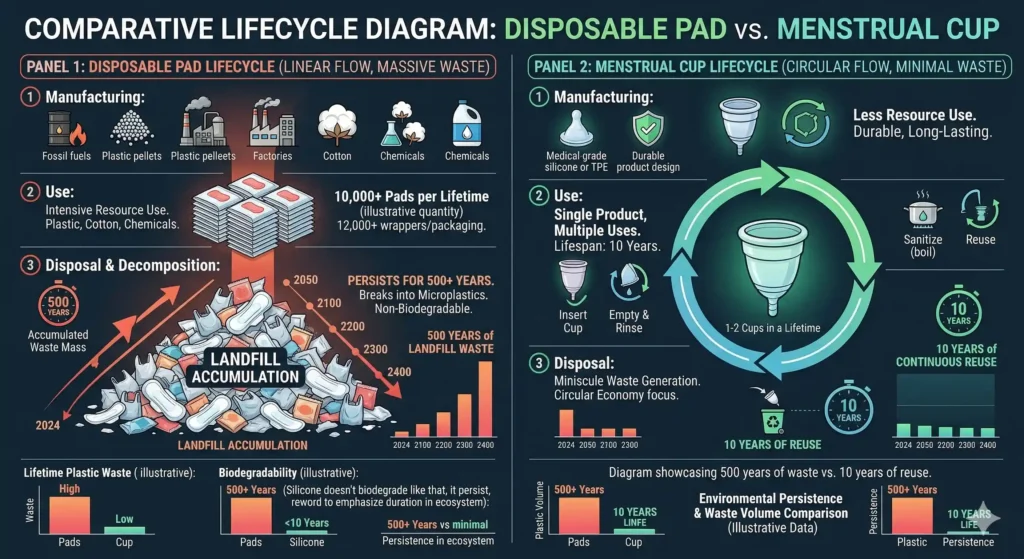
For decades, the conversation around menstruation has been dominated by convenience, often at the hidden cost of environmental degradation and personal health. A single person who menstruates uses between 5,000 and 15,000 pads and tampons in their lifetime. Most of these products contain up to 90% plastic, taking upwards of 500 to 800 years to decompose in landfills.
Eco-menstruation isn’t just a trend; it is a vital shift toward “period heroism”—choosing products that protect both your body and the Earth. By understanding the biological nuances of your cycle and the environmental footprint of your choices, you can transform a monthly necessity into an act of sustainability.
The Environmental Toll of Traditional Period Products
Traditional sanitary pads are essentially plastic sandwiches. From the leak-proof backing to the synthetic fibers and individual wrappers, the waste is astronomical. When these products end up in the ocean, they break down into microplastics, entering the food chain and harming marine life.
Furthermore, the bleaching process used to make cotton appear “pure” white often involves chlorine, which can leave trace amounts of dioxins—known endocrine disruptors—in the products.
1. The Menstrual Cup: The Gold Standard of Eco-Menstruation
The menstrual cup is perhaps the most famous “hero” of the zero-waste movement. Made from medical-grade silicone, these bell-shaped cups can last up to 10 years with proper care. Unlike tampons, they collect fluid rather than absorbing it, which helps maintain the natural pH and moisture balance of the vaginal flora.
If you are new to tracking your cycle to time your cup usage, understanding the biological basics like what does ovulation mean can help you predict your heaviest flow days and choose the right cup capacity.
2. Period Underwear: Comfort Meets Sustainability
For those who find internal products intimidating, period underwear is a game-changer. These garments feature multi-layered technology—an absorbent layer, a leak-proof barrier, and a moisture-wicking top sheet. They look and feel like regular lingerie but can hold the equivalent of 2 to 4 tampons.
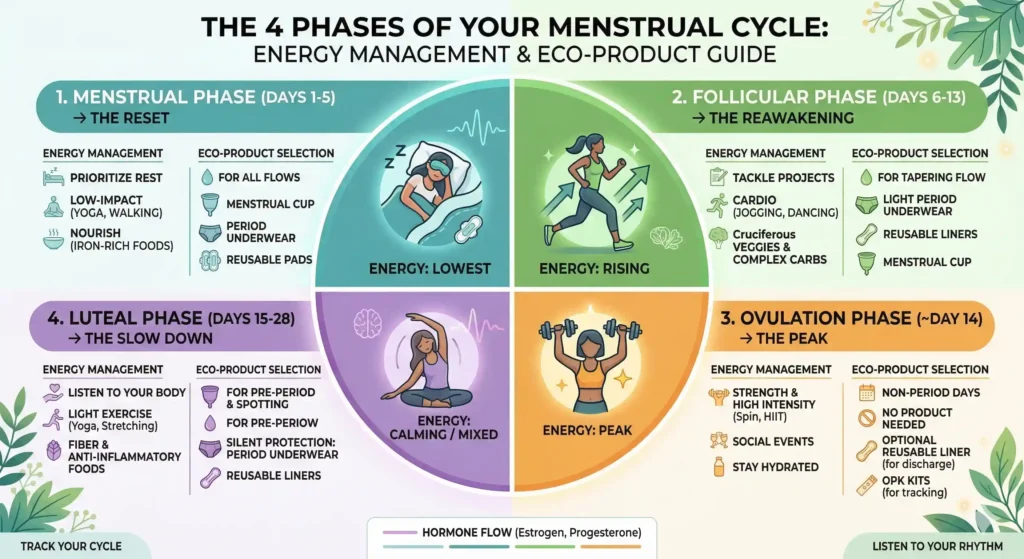
Switching to reusable underwear reduces the mental load of “running out of supplies.” However, managing the hormonal shifts during your cycle can still be taxing. To stay balanced, you might find that how to clear brain fog techniques are particularly useful during the luteal phase when progesterone levels rise.
3. Reusable Cloth Pads
Modern cloth pads are a far cry from the “rags” used by previous generations. Often made from bamboo or organic cotton with a PUL (polyurethane laminate) backing for leak protection, they are breathable and significantly reduce the risk of contact dermatitis often caused by the plastic mesh on disposable pads.
4. Plastic-Free and Organic Disposables
If reusables don’t fit your lifestyle yet, “bio-disposables” offer a middle ground. These are made from FSC-certified wood pulp, organic cotton, and compostable bio-plastics (like cornstarch). They offer the convenience of traditional pads without the 500-year environmental legacy.
According to the World Wildlife Fund (WWF), reducing plastic consumption at the individual level is a critical pillar in global conservation efforts.
Synchronizing Your Health with Eco-Choices
Eco-menstruation is deeply tied to body literacy. When you move away from synthetic products, you become more in tune with your body’s signals. For instance, many users report fewer cramps and shorter periods after switching to chemical-free alternatives.
During your period, your body’s energy levels naturally dip. While it’s a time for rest, light movement can actually alleviate pelvic congestion. Incorporating 5 everyday stretches to relieve tension can help manage menstrual discomfort while staying aligned with a natural, holistic lifestyle.
Stress, Hormones, and the Environment
The transition to zero-waste living should be empowering, not stressful. We know that high stress levels can actually disrupt menstrual regularity. If you’re feeling overwhelmed by the lifestyle shift, use a stress level calculator to gauge your current state and ensure you’re making changes at a sustainable pace for your mental health.
Medical studies published by the Mayo Clinic highlight that hormonal imbalances can often be exacerbated by environmental toxins, further validating the switch to organic, medical-grade period products.
How to Make the Switch: A Step-by-Step Guide
- Start Small: Try using period underwear at night first to build confidence.
- Invest in Quality: Buy medical-grade silicone cups or OEKO-TEX certified fabrics.
- The “Wet Bag” Method: Use a waterproof bag to store used cloth pads when you’re on the go.
- Sanitization is Key: Always boil your menstrual cup for 5-8 minutes between cycles to ensure it is sterile.
Conclusion
Eco-menstruation is more than just a waste-reduction strategy; it is a reclamation of menstrual health. By choosing “zero-waste heroes” like cups, period undies, and organic cotton, you are voting for a future where personal care doesn’t come at the expense of the planet. Start your journey today—one cycle at a time.
Frequently Asked Questions
-
Are menstrual cups actually hygienic?
Yes. Medical-grade silicone is non-porous and resistant to bacterial growth. As long as you wash your hands before insertion and boil the cup between cycles, it is as hygienic (if not more so) than traditional tampons.
-
How do I clean period underwear when I’m out?
Most people find that one pair lasts a full work or school day. However, if you need to change, simply carry a small “wet bag” (a waterproof pouch) to store the used pair until you get home to rinse and wash them.
-
Can I use a menstrual cup with an IUD?
In most cases, yes. However, it is vital to break the vacuum seal of the cup carefully before removal to avoid putting pressure on the IUD strings. Always consult your gynecologist first.
-
Is eco-menstruation more expensive?
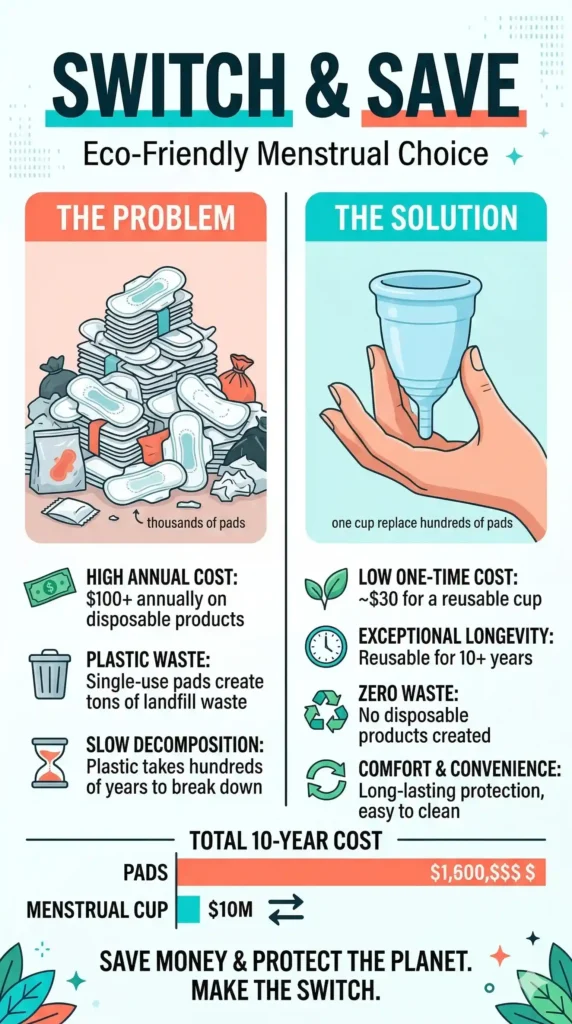
The upfront cost is higher (a cup can cost $25-$40), but since it lasts 10 years, you save thousands of dollars over time. It is a one-time investment that pays for itself within a few months.